Heart Health
My Blood Pressure Is High. What Now?
A simple guide to what a high blood pressure reading means, why home readings matter, what tests may be done, and what treatment usually involves.
Patient information page | Last reviewed: June 2026
The quick answer
One high blood pressure reading does not always mean you have long-term high blood pressure. Blood pressure can rise temporarily because of stress, pain, recent activity, caffeine, poor sleep, anxiety, or being in a medical setting. Many people need home blood pressure readings to confirm the pattern. If high blood pressure is confirmed, treatment may include lifestyle changes, medicines, or both.
Printable resource: Use this home blood pressure guide and 7-day chart to record readings before your appointment.
Download the home BP chartWhy should blood pressure be checked at home?
Blood pressure is often higher in a doctor’s clinic or hospital than it is at home. This is called white coat hypertension or the white coat effect. Home readings can give a better picture of your usual blood pressure than a single clinic reading.
Your doctor may ask you to check your blood pressure at home twice a day for several days, then use the average reading. This helps avoid starting treatment based only on one unusually high clinic reading.
When treatment may start sooner
If blood pressure is very high, especially around 180/120 mmHg or higher, or if there are symptoms or signs that high blood pressure may be affecting the heart, brain, kidneys, eyes, or blood vessels, your doctor may arrange urgent assessment or start treatment without waiting for home readings.
How to measure blood pressure at home
Use a validated upper-arm monitor if possible. Check your blood pressure when you are calm, seated, and rested.
Rest first. Sit quietly for 5 minutes before checking.
Avoid triggers before the reading. Avoid caffeine, smoking, nicotine, and exercise for about 30 minutes if possible.
Sit correctly. Keep your back supported, feet flat on the floor, legs uncrossed, and arm supported at heart level.
Use the cuff correctly. Use the correct cuff size on a bare arm, not over clothing.
Take two readings. Take 2 readings about 1 minute apart, morning and evening, for 4 to 7 days if advised.
Record the readings. Write down the systolic number, diastolic number, pulse, date, time, and any useful comments.
What tests might be done?
If your blood pressure appears to be high, your doctor may suggest checks to look for causes, related risk factors, and any signs that blood pressure may already be affecting the body.
Urine test
Checks for blood or protein, which can be linked with kidney strain or kidney disease.
Kidney blood tests
Checks kidney function and salts in the blood.
Blood sugar and cholesterol
Helps assess diabetes risk and overall heart and stroke risk.
ECG and eye check
An ECG can look for heart strain. An eye check can look for blood vessel changes at the back of the eye.
What happens after the checks?
If your average blood pressure is higher than expected, your doctor will discuss the next step. Some people start with lifestyle changes. Others need medicine as well, especially if blood pressure is clearly high, if there is diabetes or kidney disease, or if overall heart and stroke risk is raised.
The aim is not just to improve the number. The aim is to reduce the long-term risk of stroke, heart attack, heart failure, kidney disease, eye damage, and blood vessel damage.
Common blood pressure medicines
Your doctor will choose medicine based on your age, kidney function, pregnancy status, other medical conditions, and blood pressure pattern. These are three common groups.
Calcium channel blockers
These help blood vessels relax and widen, so blood flows more easily. A common example is amlodipine.
ACE inhibitors
These act on a hormone system involved in blood pressure control. They help blood vessels relax and reduce salt and water retention signals.
Thiazide-like diuretics
These help the body remove extra salt and water through the kidneys, which helps blood pressure fall.
Some people need one medicine. Others need more than one. This is common and means the body needs extra help to keep blood pressure safely controlled.
What other changes should I make?
Lifestyle changes can make a real difference. They are helpful whether or not you also need medicine.
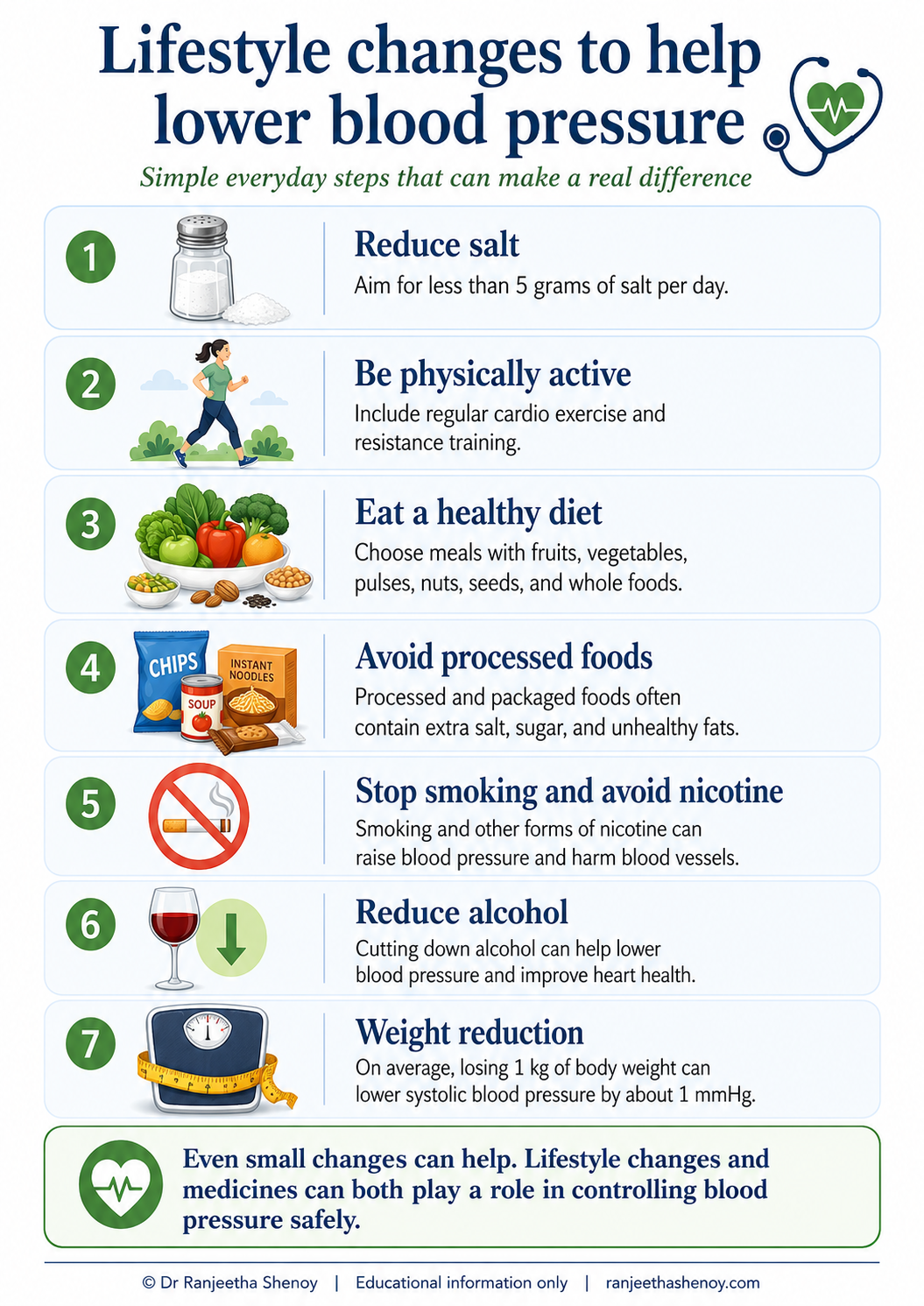
Lifestyle changes that can help lower blood pressure.
- Reduce salt: aim for less than 5 grams of salt per day.
- Be physically active: include cardio exercise and resistance training.
- Eat a healthy diet: choose fruits, vegetables, pulses, nuts, seeds, and whole foods.
- Avoid processed foods: packaged foods often contain extra salt, sugar, and unhealthy fats.
- Stop smoking and avoid nicotine products: nicotine can raise blood pressure and heart rate, while smoking greatly increases cardiovascular risk.
- Reduce alcohol: cutting down can help lower blood pressure.
- Lose weight if needed: on average, losing 1 kg of body weight may lower systolic blood pressure by about 1 mmHg.
- Sleep better: poor sleep and sleep apnoea can contribute to high blood pressure.
A note about salt substitutes
Some salt substitutes contain potassium. These are not suitable for everyone, especially people with kidney disease or those taking certain blood pressure medicines. It is best to ask your doctor before using them regularly.
When to seek urgent help
Seek emergency medical help if high blood pressure is associated with chest pain, severe breathlessness, weakness on one side of the body, facial drooping, new confusion, fainting, severe headache with neurological symptoms, vision loss, seizure, or severe symptoms in pregnancy. Also seek urgent help if your blood pressure is around 180/120 mmHg or higher and you feel unwell.
Key message
A high blood pressure reading is common, and it does not always mean you immediately need lifelong treatment. The next step is often to confirm the pattern with home readings, look for any signs that blood pressure is affecting the body, and review your overall cardiovascular risk.
Blood pressure can often be improved with lifestyle changes, medicines, or both. Treating it matters because it helps protect your heart, brain, kidneys, eyes, and blood vessels over the long term.
References
- World Health Organization. Hypertension fact sheet.
- American Heart Association. High Blood Pressure patient information.
- European Society of Cardiology. Patient information on hypertension and cardiovascular risk.
- American College of Cardiology and American Heart Association. Guideline for prevention, detection, evaluation, and management of high blood pressure in adults.