Heart Health
Lowering Cholesterol Naturally: A Lifestyle Guide
A practical guide to the diet, activity, weight, and habit changes that can help improve cholesterol.
Patient information page | Last reviewed: June 2026
The quick answer
Lifestyle changes can help lower LDL cholesterol in many people, especially when several changes are combined. The strongest steps are reducing saturated fat, eating more soluble fibre, choosing healthier fats, staying active, reducing excess weight if needed, stopping smoking, and limiting alcohol if triglycerides are high. Some people still need medicine because cholesterol is also strongly affected by genetics and overall cardiovascular risk.
When your doctor mentions high cholesterol, medicine is not always the only next step. If cholesterol is only mildly raised, or if your overall risk is low, your doctor may suggest a period of lifestyle change before deciding whether medicine is needed.
For other people, medicine may be recommended straight away because their cholesterol is very high, they have diabetes or kidney disease, they have already had a heart attack or stroke, or their overall cardiovascular risk is high. Lifestyle changes still matter in these situations, but they may not be enough on their own.
Lowering cholesterol naturally: the key steps
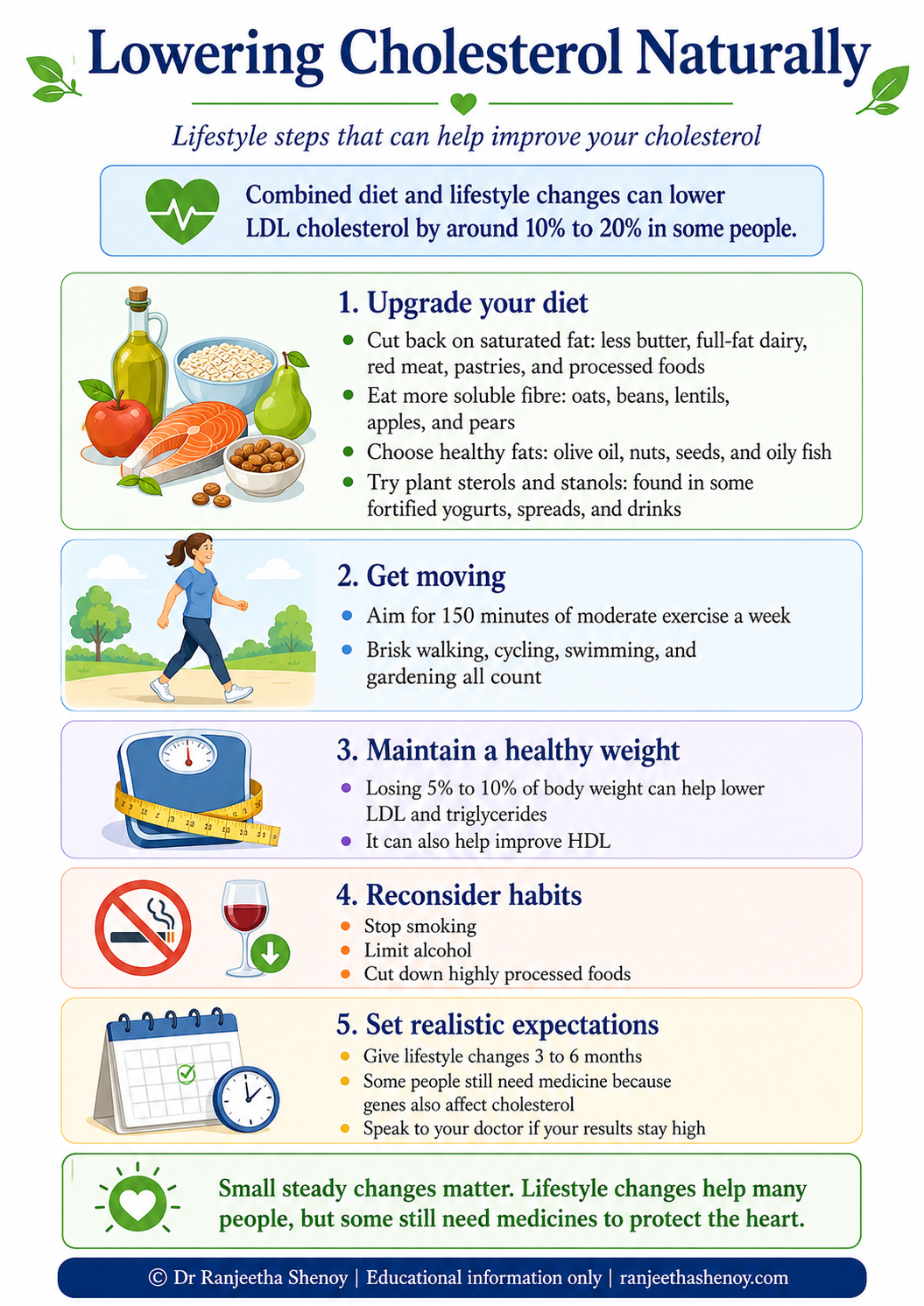
1. Upgrade your diet
Food choices have a direct effect on cholesterol levels. A helpful diet does not need to be perfect, but it should focus on repeated, realistic swaps.
Cut back on saturated fat
Saturated fats are found in foods such as butter, ghee, full-fat dairy, fatty red meat, processed meat, pastries, biscuits, and many fried or packaged foods. Reducing these can help lower LDL cholesterol.
Eat more soluble fibre
Soluble fibre helps reduce cholesterol absorption in the gut. Good sources include oats, barley, beans, lentils, peas, apples, pears, and some seeds.
Choose healthier fats
Replace saturated fats with unsaturated fats where possible. Examples include olive oil, nuts, seeds, avocado, and oily fish. These swaps are usually more useful than simply choosing very low-fat foods.
Consider plant sterols and stanols
Plant sterols and stanols are added to some yogurts, spreads, and drinks. They can reduce cholesterol absorption. They are not essential for everyone, and they should not replace a balanced diet.
2. Get moving
Regular physical activity helps the body handle fats better. It can improve triglycerides and HDL cholesterol, and it also helps blood pressure, blood sugar, weight, sleep, and mood.
A useful target is at least 150 minutes of moderate activity each week, such as brisk walking, cycling, swimming, dancing, or active gardening. Strength or resistance exercise on 2 or more days each week is also helpful.
3. Maintain a healthy weight
Carrying extra weight, especially around the middle, can affect how the liver processes cholesterol and triglycerides. Losing 5% to 10% of body weight, if needed, can help improve LDL cholesterol, triglycerides, HDL cholesterol, blood pressure, and blood sugar.
The aim is not rapid weight loss. Slow, steady, sustainable changes are more useful than short strict diets that cannot be maintained.
4. Reconsider habits that affect cholesterol and heart risk
-
Stop smoking. Smoking lowers protective HDL cholesterol and strongly increases the risk of heart attack, stroke, and blood vessel disease. Stopping smoking improves cardiovascular risk even if cholesterol numbers do not change dramatically.
-
Limit alcohol. Too much alcohol can raise triglycerides and blood pressure. Reducing alcohol is especially important if triglycerides are high.
-
Cut down highly processed foods. Many packaged foods contain saturated fat, trans fats, excess salt, refined starches, or added sugar. These can worsen cholesterol, triglycerides, weight, and blood pressure.
5. Set realistic expectations
Lifestyle changes are powerful, but they take time. Many people need to continue changes for at least 3 to 6 months before a clear difference is seen on blood tests.
Cholesterol is also affected by genetics. Some people make too much cholesterol in the liver even with a healthy diet, regular exercise, and a healthy weight. If your numbers stay high, your doctor may discuss cholesterol-lowering medicine to protect your heart and blood vessels.
Do not stop prescribed cholesterol medicine without advice
If you have already been prescribed a statin or another cholesterol medicine, speak to your doctor before stopping it. Lifestyle changes and medicines can work together, especially if your cardiovascular risk is high.
What should I ask my doctor?
- Which part of my cholesterol result is high?
- What is my LDL cholesterol and non-HDL cholesterol?
- Are my triglycerides high?
- Do I need a repeat or fasting lipid profile?
- What is my overall heart and stroke risk?
- Is lifestyle change enough for now, or should I consider medicine?
- When should my cholesterol be checked again?
When to seek urgent help
High cholesterol itself usually does not cause urgent symptoms. Seek emergency medical help if you have chest pain or pressure, pain spreading to the arm, jaw, back, or neck, severe breathlessness, sudden weakness on one side of the body, facial drooping, sudden speech difficulty, sudden vision loss, or collapse. Seek urgent help for severe upper abdominal pain with vomiting or feeling very unwell, especially if triglycerides are very high.
Key message
Lowering cholesterol naturally is usually about steady changes rather than one dramatic fix. Reducing saturated fat, increasing soluble fibre, choosing healthier fats, being active, reducing excess weight if needed, stopping smoking, and limiting alcohol can all help.
Some people still need medicine because genes and overall cardiovascular risk matter. This is not a failure. It simply means the body needs extra help to reduce long-term risk safely.
References
- British Heart Foundation. Cholesterol-lowering diet and cholesterol information.
- American Heart Association. Prevention and treatment of high cholesterol.
- National Heart, Lung, and Blood Institute. Therapeutic Lifestyle Changes to lower cholesterol.
- Portfolio diet research on plant sterols, soluble fibre, nuts, and cholesterol-lowering dietary patterns.