Heart Health
Heart Attack Warning Signs: What to Look For and When to Act
A simple guide to classic heart attack symptoms, less typical warning signs, and what to do immediately if you think a heart attack may be happening.
Patient information page | Last reviewed: June 2026
The quick answer
A heart attack happens when blood flow to part of the heart muscle is suddenly blocked, usually by a blood clot. Fast treatment can reduce heart damage and save life.
Classic warning signs include central chest pressure or tightness, pain spreading to the arm, jaw, neck, back, or upper abdomen, shortness of breath, sweating, nausea, vomiting, dizziness, or feeling very unwell.
Not everyone gets dramatic crushing chest pain. Some people, especially women, older adults, and people with diabetes, may have less typical symptoms such as indigestion-like pain, unusual shortness of breath, or sudden overwhelming fatigue.
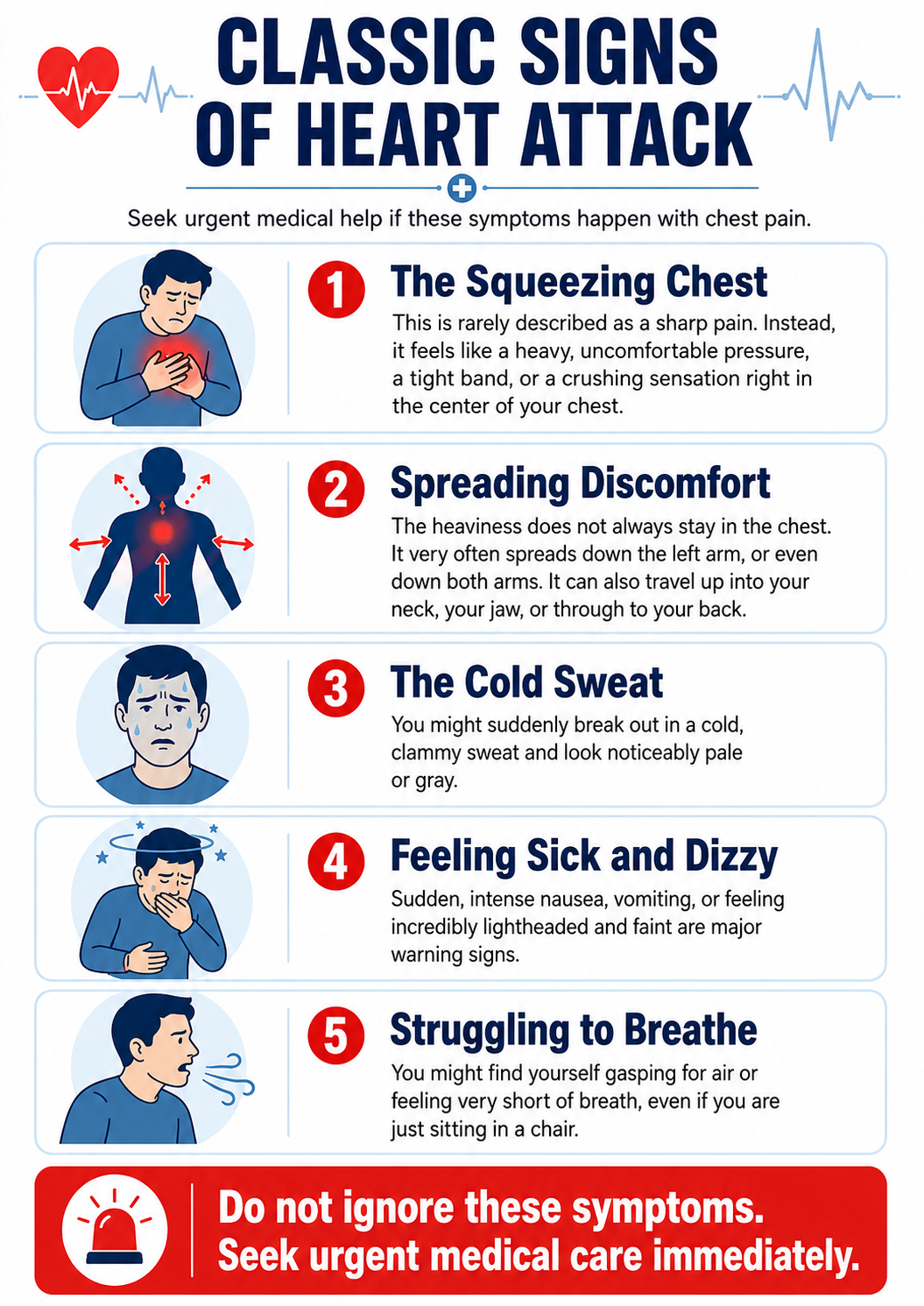
1. The classic signs
These are the symptoms many people associate with a heart attack. If you or someone near you develops these, act immediately.
The squeezing chest
A heavy pressure, squeezing, fullness, or tight band in the centre of the chest. It is often not described as a sharp pain.
Spreading discomfort
The discomfort can spread to one or both arms, the shoulders, neck, jaw, back, or upper abdomen.
The cold sweat
Sudden sweating, clamminess, or looking unusually pale, blue, grey, or unwell.
Feeling sick or dizzy
Nausea, vomiting, light-headedness, faintness, or a sudden sense that something is seriously wrong.
Struggling to breathe
Shortness of breath can happen with chest pain or on its own.
Symptoms that last or return
Heart attack discomfort often lasts more than a few minutes or goes away and comes back.
Do not wait it out
Do not try to sleep it off or wait for several hours to see what happens. If you suspect a heart attack, seek emergency medical help immediately. Do not drive yourself to hospital.
3. Your emergency action plan
If you suspect a heart attack, every minute counts. The safest choice is to call emergency medical services immediately and follow the advice you are given.
Call emergency medical services immediately
Do not wait to see if the symptoms pass. Do not drive yourself to hospital. Emergency teams can start treatment on the way and can take you to the right place safely.
Sit down and rest
Stop what you are doing. Sit in a comfortable supported position. Many people find it easiest to sit on the floor with the back supported and knees bent, or sit upright in a chair.
Take aspirin if appropriate
If adult aspirin is available, chew one 300 mg tablet while waiting for help, only if you are not allergic to aspirin and have not been told by a doctor not to take it. Aspirin helps reduce further clotting.
If you already have angina, use your prescribed GTN
If you have been prescribed GTN spray or tablets for angina, follow your angina plan while help is on the way.
Monitor the person
Stay with the person if you can. If they become unresponsive and stop breathing normally, start CPR and follow emergency dispatcher instructions if available.
When to act immediately
Seek emergency medical help immediately if you have chest pressure, squeezing, spreading pain, shortness of breath, sweating, nausea, vomiting, dizziness, fainting, or a sudden feeling that something is very wrong.
It is better to be checked urgently and find out it was not a heart attack than to delay and risk serious heart damage.
Key message
Heart attack symptoms are not always dramatic, and not everyone gets obvious crushing chest pain. Classic symptoms matter, but so do less typical signs such as indigestion-like discomfort, sudden breathlessness, unusual fatigue, or feeling faint and unwell.
If you suspect a heart attack, do not ignore it. Call emergency medical services immediately.
References
- NHS. Heart attack information and immediate actions.
- American Heart Association. Warning signs of a heart attack.
- American Heart Association. Heart attack symptoms in women.
- British Heart Foundation. Heart attack symptoms and emergency help.