Heart Health
Chest Pain: When Is It Urgent?
A simple guide to chest pain red flags, angina versus heart attack, common non-heart causes, and when to seek emergency medical help.
Patient information page | Last reviewed: June 2026
The quick answer
Chest pain can be frightening. Not every chest ache is a heart attack, but chest pain should not be ignored or slept off if it is new, severe, persistent, or associated with other warning signs.
Seek emergency medical help immediately if chest pain feels heavy, tight, squeezing, or crushing, or if it spreads to the arm, jaw, neck, back, or upper abdomen. Also seek emergency help if it comes with breathlessness, sweating, nausea, vomiting, faintness, or feeling very unwell.
Do not drive yourself to hospital with possible heart symptoms. Sit down and call emergency services.
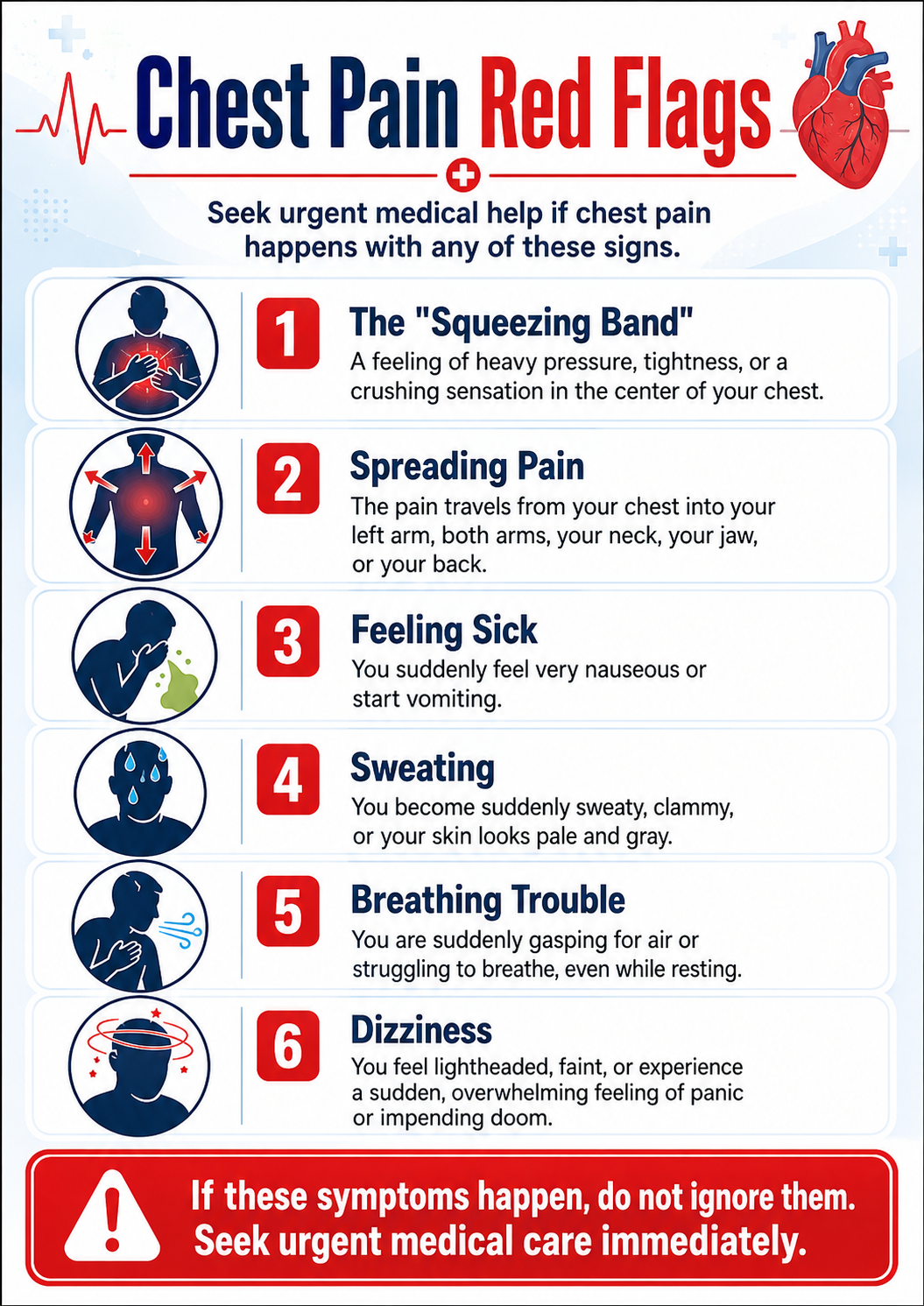
1. Red flags: when to seek emergency help
If you or someone near you has chest pain with any of the symptoms below, do not wait to see if it passes. Seek emergency medical help immediately.
The squeezing band
A heavy pressure, tightness, squeezing, or crushing sensation in the centre of the chest.
Spreading pain
Pain or discomfort spreading to the left arm, right arm, both arms, neck, jaw, back, shoulder, or upper abdomen.
Feeling sick
Sudden nausea, vomiting, indigestion-like discomfort, or feeling unusually unwell with chest discomfort.
Sweating or clamminess
Sudden sweating, clammy skin, or looking unusually pale, grey, or unwell.
Breathing trouble
Shortness of breath, gasping for air, or struggling to breathe even while resting.
Dizziness or faintness
Feeling light-headed, faint, unusually weak, confused, or having a sudden sense that something is seriously wrong.
Do not drive yourself
If heart symptoms are possible, do not drive yourself to hospital. Emergency teams can assess you, start treatment, and take you to the right place safely.
2. Angina vs a heart attack
If you have already been diagnosed with angina, it is important to know when symptoms are following your usual pattern and when they may suggest a heart attack or unstable angina.
Both angina and heart attack symptoms can happen because the heart muscle is not getting enough oxygen-rich blood. The difference is how the symptoms behave and whether they settle.
Quick comparison guide
| Feature | Stable angina | Heart attack or unstable angina |
|---|---|---|
| When does it happen? | Usually predictable. It may happen during exertion, such as walking uphill or climbing stairs, or during strong stress. | May happen at rest, during sleep, or with less activity than usual. It may be new, worse, or different from usual. |
| How long does it last? | Usually settles within a few minutes with rest or prescribed angina medicine. | May last longer than usual, keep coming back, or fail to settle. Heart attack pain often lasts more than a few minutes and may persist. |
| Does resting help? | Usually yes. Stopping activity and sitting down often eases the pain. | Rest may not help, or the pain may return quickly. |
| Does prescribed GTN help? | Usually helps quickly if it is the person’s usual stable angina pattern. | May not help enough, may not last, or symptoms may worsen. Follow your emergency plan and seek emergency medical help if pain persists. |
| What should I do? | Follow your angina plan. Tell your doctor if symptoms are becoming more frequent, more severe, or easier to trigger. | Sit down and seek emergency medical help immediately. |
3. What else could chest pain be?
The chest contains the heart, lungs, food pipe, ribs, muscles, nerves, and large blood vessels. This means chest pain can have many causes.
Even when a non-heart cause seems likely, new or unexplained chest pain should be taken seriously, especially if you have risk factors such as high blood pressure, diabetes, smoking, high cholesterol, kidney disease, or previous heart disease.
Heartburn or acid reflux
This may cause burning behind the breastbone, often after meals, alcohol, spicy food, or lying flat. A sour taste in the mouth can happen.
Muscle strain
This may happen after lifting, coughing, exercise, or injury. The pain is often sharp and may worsen when pressing a specific spot or twisting.
Anxiety or panic attacks
Panic can cause chest tightness, a racing heart, breathlessness, trembling, and fear. It can feel similar to a heart problem, so new symptoms still need care.
4. Your action plan
If you are unsure whether chest pain is serious, it is safer to be checked than to wait at home.
Seek emergency medical help if the pain is heavy, tight, squeezing, spreading, severe, new, unexplained, or not settling quickly, especially if it comes with breathlessness, sweating, nausea, faintness, or feeling very unwell.
If the pain is mild, clearly linked to movement, pressing a sore spot, or indigestion, arrange medical advice promptly, especially if it is new, recurring, or worrying you.
Emergency help box
Seek emergency medical help immediately if chest pain is severe, persistent, happening at rest, spreading to the arm, jaw, neck, back, or upper abdomen, or associated with breathlessness, sweating, nausea, vomiting, fainting, or feeling very unwell.
Do not drive yourself to hospital with possible heart symptoms.
Key message
Chest pain has many possible causes, but heart-related chest pain can be life-threatening. Heavy, tight, spreading, persistent, or unexplained chest pain needs urgent assessment.
It is better to have a false alarm checked than to ignore a warning sign from the heart.
References
- NHS. Heart attack.
- NHS. Angina.
- British Heart Foundation. Chest pain and angina information.
- American Heart Association. Warning signs of a heart attack.
- Mayo Clinic. Chest pain symptoms and when to seek emergency care.
- CDC. About heart attack symptoms, risk, and recovery.